
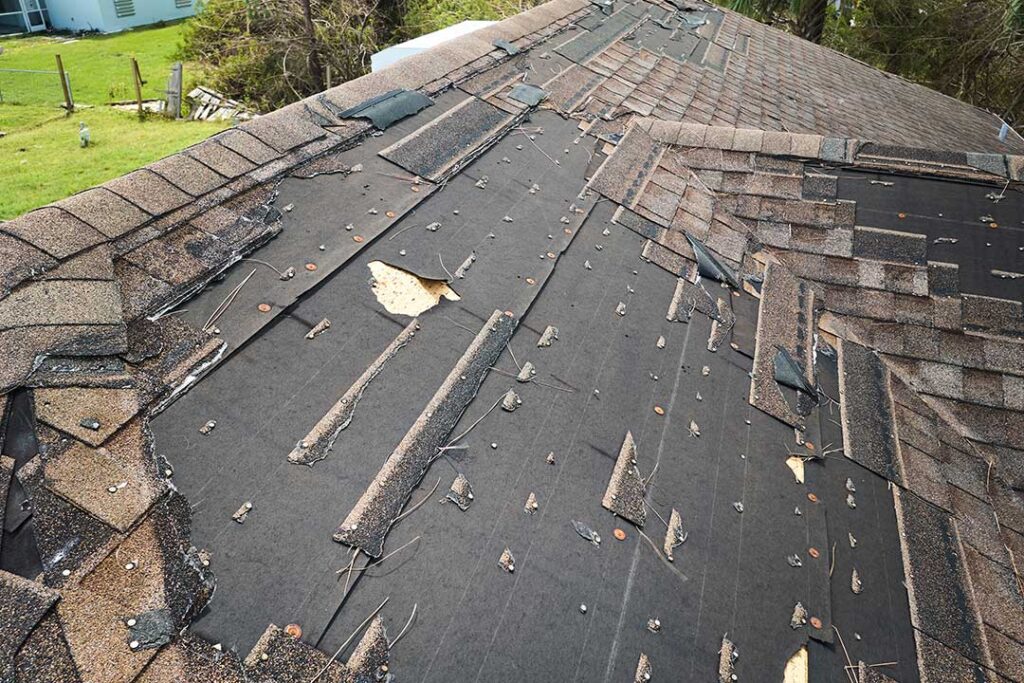
What are the earliest signs of roof damage?
The first signs of roof damage are often subtle: a small ceiling stain, a few loose shingles, dark marks in the attic, or unusually heavy granules collecting near downspouts. Finding these clues early can help prevent a minor roofing problem from becoming interior water damage, insulation damage, or structural decay.
In Johnstown, NY, roofs must withstand freeze-thaw cycles, snow, ice, wind, heavy rain, and occasional summer storms. Those repeated weather changes can gradually weaken roofing materials even when the roof still looks acceptable from the ground.
Which roof surfaces should homeowners inspect first?
Begin with areas where roofing materials change direction or meet another surface. These locations are more vulnerable because water and ice can collect there.
Look for:
- Missing, cracked, curled, or lifted shingles
- Shingles with exposed dark underlayers
- Loose flashing around chimneys, vents, skylights, and roof edges
- Damaged rubber seals around plumbing vent pipes
- Sagging sections or uneven roof lines
- Excessive moss, algae, or debris buildup
- Granules collecting in gutters or at the ends of downspouts
A few loose granules are normal on an older roof, especially after installation or a severe storm. A noticeable increase in granules, particularly when paired with bald-looking shingles, may indicate that the protective surface is wearing away.
Roof inspection from the ground is safer than climbing onto the roof. Binoculars can help reveal damaged shingles, lifted edges, and gaps around flashing without creating a fall hazard.
How can water damage appear inside the house?
Water does not always enter directly beneath the visible exterior damage. It can travel along roof decking, rafters, insulation, or framing before appearing indoors. That means an interior stain may be located some distance from the actual roof leak.
Check ceilings, upper-floor walls, and attic spaces for:
- Brown, yellow, or gray water stains
- Bubbling or peeling paint
- Damp insulation
- Musty odors
- Soft drywall or warped trim
- Moisture on rafters or roof decking
- Small puddles or damp spots after rain or snowmelt
A stain that dries after a storm is still evidence of possible water entry. The absence of active dripping does not prove that the roof is dry. Some leaks appear only during wind-driven rain, while others occur during rapid snowmelt or when ice blocks normal drainage.
Fresh stains deserve attention, but older stains should not automatically be dismissed. A previously repaired area can leak again if the underlying cause was not corrected.
What should be checked in the attic?
The attic often provides the clearest view of early roof problems. Inspect it during daylight and, when practical, after rainfall or snowmelt. Use a flashlight and avoid stepping between ceiling joists unless proper walking surfaces are present.
Look for:
- Dark streaks or water marks on the underside of the roof decking
- Wet or compressed insulation
- Rust on fasteners, metal connectors, or heating components
- Daylight visible through the roof
- Mold-like growth caused by persistent moisture
- Frost on nails or roof sheathing during cold weather
- Condensation on the underside of the roof
Frost in an attic does not always mean the roof is leaking. It can result from warm, moist household air reaching a cold roof surface because of inadequate ventilation or air sealing. When temperatures rise, that frost can melt and resemble a roof leak. Ventilation and moisture control therefore matter alongside shingle condition.
How do gutters and downspouts reveal roof trouble?
Gutters can provide useful evidence even when the roof itself is difficult to see. Heavy granule accumulation may indicate shingle deterioration. Shingle fragments, roofing nails, or pieces of flashing suggest that part of the roof system may be breaking down.
Also watch for:
- Gutters pulling away from the fascia
- Water spilling over during ordinary rainfall
- Persistent clogs near downspout outlets
- Rusted seams or holes
- Ice buildup along the roof edge
- Water stains on exterior siding beneath the gutters

Clogged gutters do not always mean the roof is damaged. Leaves, branches, and seasonal debris are common causes. However, blocked drainage can allow water to back up beneath roofing materials, especially during freeze-thaw weather.
Downspouts should direct water away from the foundation. If runoff repeatedly pools beside the house, it may contribute to basement moisture, soil erosion, or foundation concerns even when the roof itself is intact.
What damage can occur after a storm?
Storm damage may not be obvious from the ground. High winds can loosen shingle edges, break seals, or remove small sections. Hail can leave dents, bruised areas, or scattered granule loss. Falling branches can damage shingles, flashing, vents, or roof decking.
After strong weather, look for:
- Shingles in the yard
- New dents or dark circular marks
- Exposed underlayment
- Bent vents or damaged flashing
- Broken branches resting on the roof
- New leaks around ceilings, attic areas, or upper walls
Do not walk on a roof to inspect storm damage. Wet shingles, steep slopes, hidden structural weakness, and loose debris create serious fall risks. Stay clear of downed power lines and damaged electrical equipment as well.
Are moss, algae, and ice dams signs of roof failure?
Moss and algae do not always mean a roof is leaking, but they can contribute to deterioration. Moss holds moisture against shingles and may lift their edges over time. Algae often appears as dark streaking and is mainly a cosmetic concern, although heavy growth can signal prolonged dampness.
Ice dams are more serious when they occur repeatedly. An ice dam forms when heat escapes through the roof, melts snow higher on the roof, and allows water to refreeze near the colder eaves. The backed-up water may work beneath shingles and into the attic or walls.
Signs connected with ice dams include:
- Water stains near exterior walls or roof edges
- Icicles combined with thick ridges of ice
- Peeling paint near upper-floor ceilings
- Damp insulation after a snow event
- Repeated winter leaks in the same location
Ice dams are influenced by insulation, ventilation, air leakage, roof design, and weather conditions. Removing ice with sharp tools can damage shingles and create a fall hazard.
When does a small sign require immediate attention?
Some conditions should not be postponed. Prompt action is warranted when there is active dripping, a sagging ceiling, visible daylight through the roof, a large section of missing roofing, exposed electrical wiring, or structural movement.
Place a container beneath an indoor drip if it is safe to do so, move valuables away from the area, and avoid touching wet electrical fixtures. If a ceiling is bulging, keep people away from the area because saturated drywall can fall.
For less urgent findings, document the location with photographs and note when the problem appeared. Tracking whether a stain expands, whether granule loss increases, or whether a leak returns after each storm can help distinguish an isolated event from an ongoing roof-system problem.
Regular observation is especially useful in the local climate. A brief inspection in spring, after major summer storms, and before winter weather can reveal changes before they become visible inside the living space.
